春がだんだん近づいてきました。日本では4月の終わりから5月の初めごろに新茶のシーズンを迎えます。
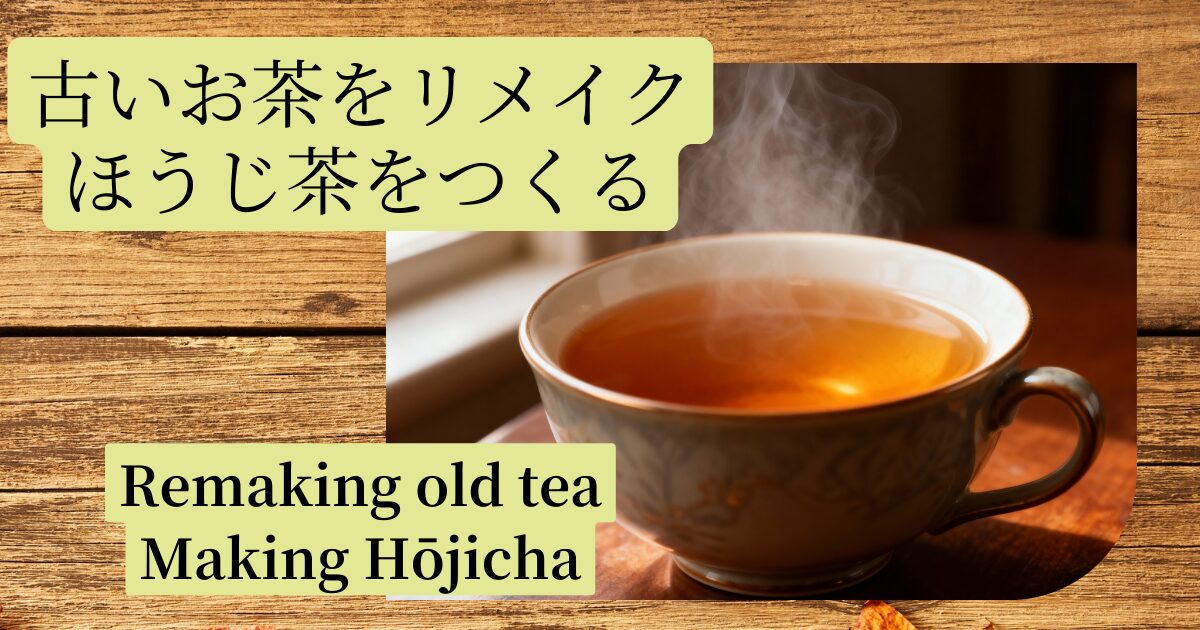
新茶の季節を迎える前に、まだ残っている去年のお茶に少し手をかけていつもと違った形で楽しむのはいかがでしょうか。焙じたお茶「ほうじ茶」をご紹介します。寒い季節によく見かけますが、まだ突然寒さが戻ってくるようなこの時期にもいいのではないでしょうか?
Spring is gradually coming. In Japan, the first flush tea season arrives around late April to early May.
Before welcoming the new tea season, why not give last year’s remaining tea a little extra treat and enjoy it in a different way? Let me introduce roasted tea, “hōjicha.” It’s often seen during the cold season, but wouldn’t it be nice even now, when sudden cold snaps still return?
ほうじ茶とは
ほうじ茶(焙じ茶)とは茶葉を焙じた、つまり焙煎したお茶のことです。一般的に煎茶、番茶、茎茶などが使われます。つまり、緑茶の茶葉を煎ったお茶です。
色は深い黄金色というか赤茶色。緑茶とは全く違った香ばしい香りが特徴的です。同じ焙煎した麦茶やコーヒーとも違う香りで、個人的には甘くない砂糖に藁を足したようなイメージです…表現するのが難しい。
初めて飲む人にとっては枯葉を連想させるかもしれません。なんか地味です。でも無害な感じでほっとします。
ほうじ茶の歴史
ほうじ茶の歴史はいくつか説があります。一つは古いお茶を再利用したもったいない精神からきているという説。他には、安価な低品質のお茶や番茶を煎ることで渋みや青臭さを抑えて飲みやすくした生活の知恵からきているという説もあります。
お茶を煎ることの効能
茶葉を煎ることで、カフェインやカテキンなど、体にとって刺激になる成分が抑えられ、体に負担の少ない飲み物になります。そしてリラックス効果につながるピラジンという成分が生まれます。
体の弱い人や、食後、寝る前、リラックスしたいときなどに適したお茶と言われています。冬に飲みたくなるのは体をいたわりたいときに適した飲み物だからでしょうね。
About Hojicha
Hojicha is tea made by roasting tea leaves. Generally, sencha, bancha, or kuki-cha are used. In other words, it’s green tea leaves that have been roasted.
Its color is a deep golden or reddish-brown. It has a distinctly roasted aroma, completely different from green tea. It also differs from the aroma of roasted barley tea or coffee. Personally, I imagine it as unsweetened sugar mixed with straw… it’s hard to describe.
For first-time drinkers, it might remind them of fallen leaves. It’s kind of plain. But it feels harmless and comforting.
History of Hojicha
Several theories exist about hojicha’s origins. One suggests it stems from the spirit of Mottainai, reusing old tea leaves. Another theory suggests it arose from the folk wisdom of roasting inexpensive, low-quality teas or bancha to reduce bitterness and grassy flavors, making them more palatable.
Benefits of Roasting Tea
Roasting tea leaves reduces stimulating components like caffeine and catechins, making it gentler on the body. It also produces pyrazine, a compound linked to relaxation effects.
It’s considered suitable for those with delicate constitutions, after meals, before bed, or when seeking a relaxing beverage. Its popularity in winter likely stems from being a drink that comforts the body.
ほうじ茶の作り方
ほうじ茶の煎り方、淹れ方をご紹介します。お茶を自分で焙煎すると、部屋中にほうじ茶のいい香りが広がります。何度か試しながら自分の方法を見つけてみてください。
煎り方
①ホーローや、スチール製の鍋を温めます。(普段使いのフライパンなどは油のにおいがついているなら避けましょう。)
温まったら濡れ布巾にあてるなどして、温度を均一化します。
②鍋に茶葉を入れます。へらで炒めたら底が簡単に見えるくらい、あまり入れすぎないくらいの量がいいかな。
③青っぽい香りから甘めの香りに変わってきます。香りが立ったら焦げないうちに火を止め、余熱で残りの熱を入れます。茶葉が緑から茶色に変わりました。
決まりは特にありません。低音で長時間、高温で短く、蒸したり、土鍋を使ったり。焦がさないようにだけ気を付けながら、香りを楽しんで焙じてください。
淹れ方
一人前3g―130㏄
90-100℃のお湯を注いで30~60秒待ちます。
ただポットのお湯をそのまま注いでも大丈夫です。煎茶と違って、熱いほど香りが立っておいしく感じやすくなります。
How to Make Hojicha
Let me introduce how to roast and brew hojicha. Roasting tea yourself fills the room with the wonderful aroma of hojicha. Try it a few times to find your own method.
Roasting Method
① Warm an enamel or steel pot. (Avoid using everyday frying pans if they retain oil odors.)
Once warmed, place a damp cloth over it to even out the temperature.
② Add tea leaves to the pan. Put in just enough so you can easily see the bottom when stirring with a spatula.
③ The aroma will change from a greenish scent to a sweeter one. When the aroma rises, turn off the heat before it burns and let the residual heat finish roasting. The leaves will turn from green to brown.
No strict rules apply. You can use low heat for a long time, high heat for a short time, steam it, or use an earthenware pot. Just be careful not to burn it, and enjoy the aroma while roasting.
Brewing Method
3g per serving ― 130ml
Pour water at 90-100°C and wait 30-60 seconds.
It’s fine to just pour water directly from the kettle. Unlike sencha, the hotter the water, the more the aroma develops and the more delicious it tastes.
お茶をお家で体験しよう
自分でお茶を煎り、体をいたわるドリンクを淹れる、とても贅沢な時間です。正直なところ、昔はほうじ茶の良さがわかりませんでした。香りも味もはっきりしないお茶だと思っていました。でもここ最近。気軽に淹れられて、自分に寄り添ってくれるお茶として重宝しています。
焙じ茶は「生活のお茶」と表現している方がいらっしゃいましたが、本当に的を得た表現だと思いました。気負わず、雑に淹れても大丈夫なお茶です。日本の日常を体験してみてください。
Tea Experience at Home
Roasting tea myself and brewing a drink that cares for my body is such a luxurious moment. To be honest, I didn’t understand the charm of hojicha before. I thought it was a tea with neither distinct aroma nor flavor. But lately, I’ve come to value it as an easy-to-brew tea that stays by my side.
Someone once described hojicha as “everyday tea,” and I thought that was a truly accurate description. It’s a tea you can brew without pressure, even if you’re a bit careless. Experience a piece of Japanese daily life.